Alien Math · Kac 1966 · Gordon, Webb and Wolpert 1992
Two drums, one set of notes
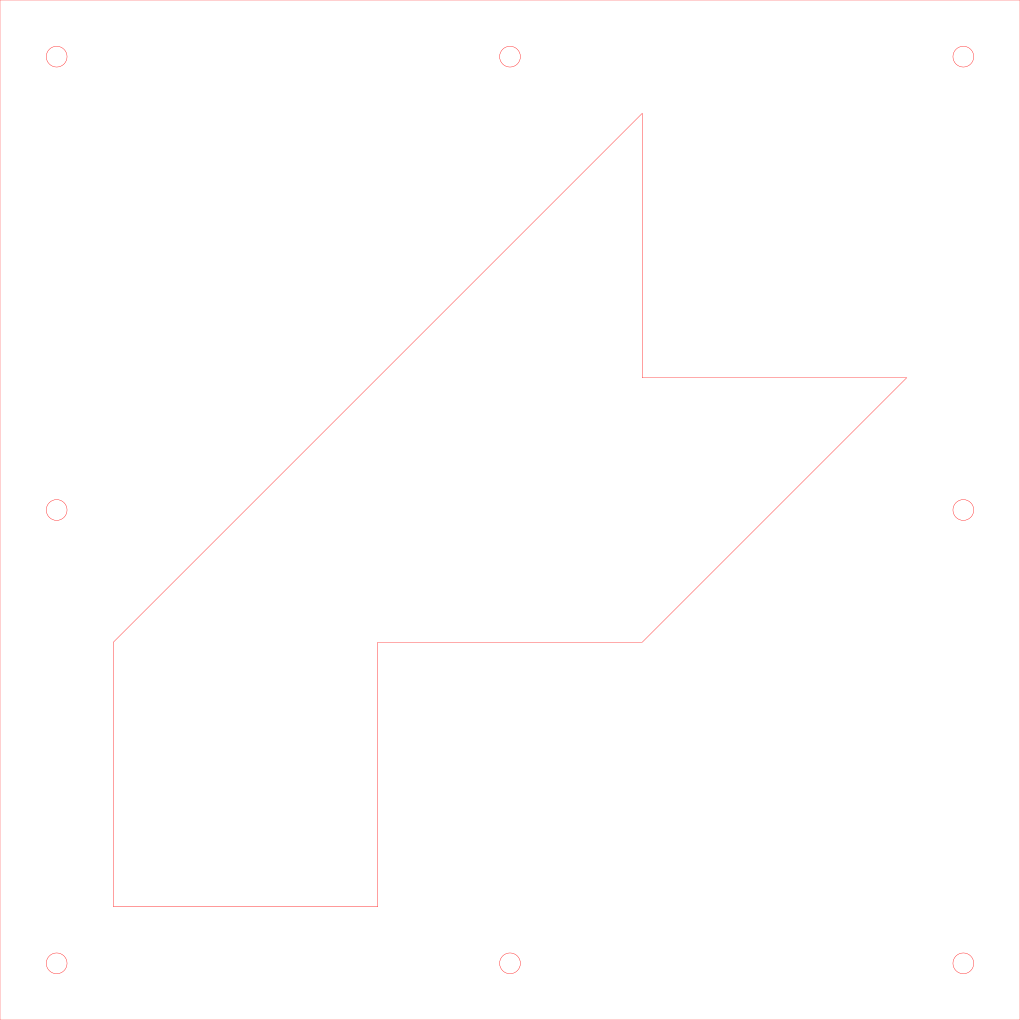
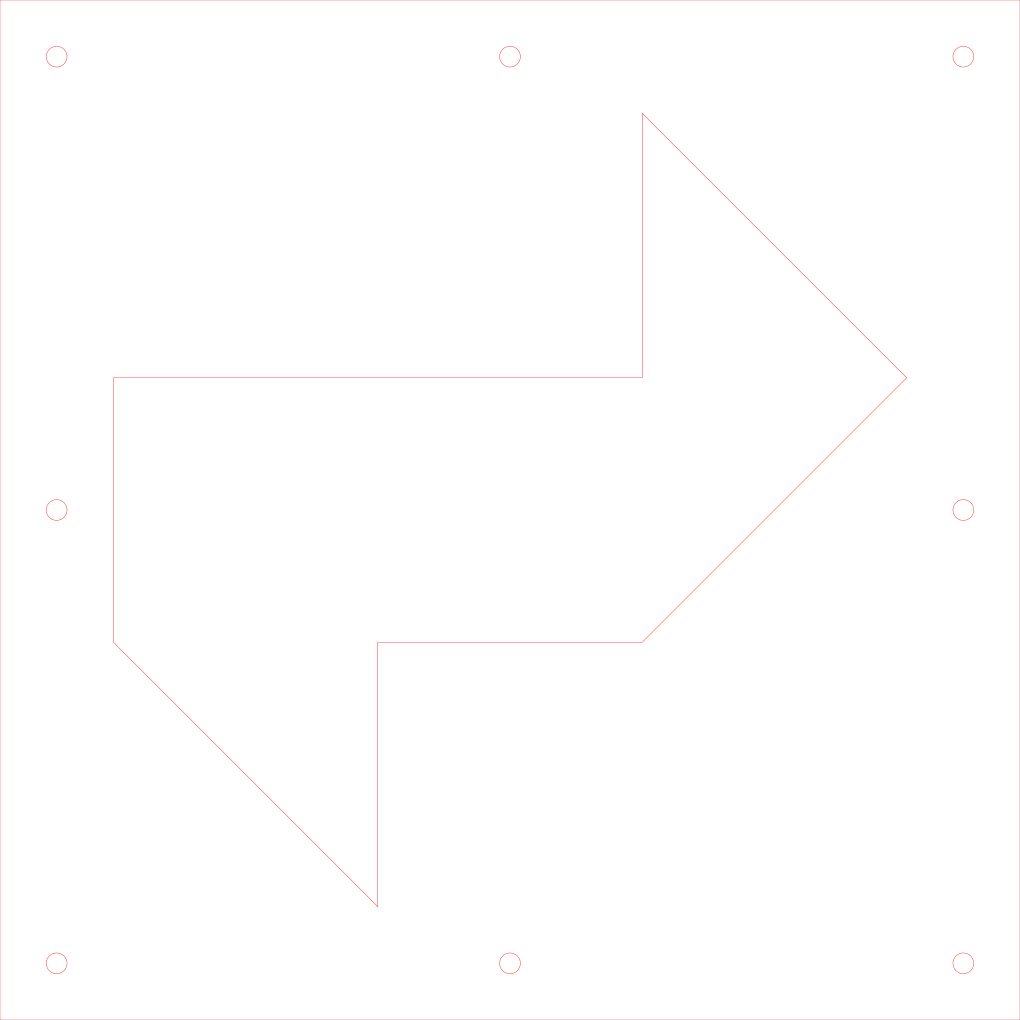
In 1966 Mark Kac asked whether you can hear the shape of a drum. In 1992 the answer came back no: these two shapes ring at exactly the same frequencies. We solved both with two independent solvers, struck them in a simulation, worked out which real builds keep the theorem, and turned the winner into cut files.
This is a reproduction of a known result, not a new one. The new parts are the build analysis (an air cavity keeps isospectrality; a clamped plate does not) and a pre-registered tap test that nobody has run yet. If you build it, the pass and fail lines are already written down.
Click anywhere on a drum to strike it there. You'll hear the same 30 pitches from both, but each mode's loudness depends on where you hit and on the shape, so a struck drum 1 and a struck drum 2 sound different. "All modes" plays every mode at the same loudness, and those two sounds are identical. Colour shows displacement: blue is down, brass is up. Pitches are scaled so mode 1 is G3 (196 Hz).
Result
The spectra match, to rounding error
Each drum is 7 right-angled half-squares with legs of length 1, so both have area 3.5 and perimeter 6 + 3√2. Solver A is a finite-element method on a mesh. Solver B is a finite-difference grid with no shared code. Each was run at four resolutions and extrapolated.
Drum 1 vs drum 2
Largest relative difference over 50 modes: about 1e-13 at every resolution, in both solvers. The discrete problems are isospectral too, which is the Sunada/transplantation structure surviving discretisation.
Solver A vs solver B
Continuum eigenvalues agree to 6e-05 (worst of 50), median about 1e-5. Corner singularities set that limit.
Two exact checkpoints
Mode 9 should be exactly 5π² = 49.348022; we get 49.348021. The 6th air-cavity mode should be π² = 9.8696; we get 9.8696.
A different shape
An L-shaped polygon with the same area differs by 0.4–12 % in the first 10 modes, so the test can fail.
| mode | λ solver A (FEM) | λ solver B (FD) | drum 1 − drum 2 | pitch ratio f/f₁ |
|---|---|---|---|---|
| 1 | 10.15279 | 10.15339 | 1e-12 | 1.0000 |
| 2 | 14.62304 | 14.62363 | 9e-13 | 1.2001 |
| 3 | 20.70422 | 20.70539 | 1e-12 | 1.4280 |
| 4 | 26.15063 | 26.15088 | 4e-13 | 1.6049 |
| 5 | 28.99419 | 28.99530 | 2e-12 | 1.6899 |
| 6 | 36.83805 | 36.83857 | 1e-12 | 1.9048 |
| 7 | 42.38909 | 42.38978 | 5e-13 | 2.0433 |
| 8 | 46.16590 | 46.16609 | 9e-13 | 2.1324 |
| 9 | 49.34802 | 49.34802 | 6e-13 | 2.2046 |
| 10 | 52.21759 | 52.21938 | 1e-12 | 2.2678 |
| 11 | 57.25645 | 57.25704 | 5e-13 | 2.3747 |
| 12 | 63.48958 | 63.49220 | 4e-13 | 2.5007 |
Tap test, simulated
Hit both drums and listen
A time-domain wave simulation: one mallet strike, 400 time units of ringing, Fourier transform of the net displacement (what an ear far away hears). Every peak on both drums lands on a predicted frequency. The peak heights don't match.
What a real build actually hears
Only some physics keeps the theorem
The argument cuts each drum into triangles and reassembles a vibration of one from reflected pieces of the other. That works when reflection preserves the boundary condition. It decides which builds can work.
Membrane, fixed edge
The Dirichlet problem above. In practice, uneven tension and air loading break it slightly.
Air cavity, rigid walls
A thin sealed cavity in the drum's shape. The Neumann spectra match to 1e-12. No tension to get wrong, which makes this the cleanest physical test.
Clamped plate
Matched modes differ by 1–15 %, stable under grid refinement.
Free plate (tapped wood)
Tapping the cut-out wooden pieces should give different spectra. That is the control in the build below.
Build sheet
Cut it, seal it, sweep it
Leg L = 70 mm, so each drum fits a 270 × 270 mm plate (210 mm across). The files are SVG and DXF in millimetres.
- D1_frame, D2_frame: plate with the drum-shaped hole and 8 M5 bolt holes. Cut 2 per drum.
- D1_lid, D2_lid: cavity lid with a 4 mm speaker port and a 4 mm mic port. The ports sit where all of the first 12 modes couple.
- base: plain plate, cut 1 per drum.
Cavity (primary): base, then two 3 mm acrylic frames (6 mm deep), then the lid. Make it airtight. Play a 300–4000 Hz sweep into one port and record at the other.
Membrane (for fun): stretch drumhead film between two frames. Only the pitch ratios are predicted.
Control: tap the two pieces that drop out of the frame cut. They should not match.
| cavity mode | predicted Hz (20 °C) | membrane ratio |
|---|---|---|
| 1 | 717 | 1.000 |
| 2 | 1403 | 1.200 |
| 3 | 1604 | 1.428 |
| 4 | 2127 | 1.605 |
| 5 | 2450 | 1.690 |
| 6 | 2576 | 1.905 |
| 7 | 2872 | 2.043 |
| 8 | 3274 | 2.132 |
| 9 | 3465 | 2.205 |
| 10 | 3713 | 2.268 |
Pass: the first 8 cavity peaks agree between drums within 0.5 %, and each is within 3 % of the prediction after correcting for temperature. The full criteria are in PREREG.md, written before any measurement.
Downloads: D1_frame.svg / .dxf, D2_frame.svg / .dxf, D1_lid.svg / .dxf, D2_lid.svg / .dxf, base.svg / .dxf. Pre-registration: PREREG.md. Solver code: fem.py, fd.py, geom.py, tap.py, cut.py.



Live literature check · October 2026
Done already, and still open
Already done
- Gordon, Webb & Wolpert 1992 construct the pair. Driscoll's 1997 Eigenmodes of Isospectral Drums gives high-accuracy values.
- Sridhar & Kudrolli 1994 measured it with microwave cavities.
- A March 2026 hobby build, We Made the Isospectral Drums and it Went… Fine, used 3D-printed frames and a balloon. Their spectrograms looked "kinda similar". Uneven tension was the main problem, and they compared no numbers.
- Other simulations: FreeFem++ 2023, COMSOL's model.
Open or fresh
- Strictly convex, analytic planar domains with the same Steklov spectrum: Hu, Shi & Tang, arXiv 2608.10557 (2026).
- Do isospectral drums stay isospectral when rotating? arXiv 2510.02397 calls it unanswered.
- Isospectral open acoustic cavities through transformation acoustics, simulated only: Cominelli et al. 2024. They call for experiments.
- Still open, as far as we found: convex isospectral planar drums, and smooth-boundary isospectral planar drums, for Dirichlet or Neumann.
- We didn't find a quantitative air-cavity acoustic measurement. That's from a quick search, so it doesn't prove there isn't one.
Next click down
Compute the free-plate spectra (Morley elements) so the wooden-tile control becomes a number. Then look through the Buser–Conway–Doyle–Semmler catalogue of planar isospectral pairs for one that is easier to build: fewer re-entrant corners and well-separated low modes, so a home measurement can resolve them.
Back to the Alien Math wing.